

By Ava Wang
Current Housing Market: Prices, Sales, and Supply
In recent months, home prices in West Jordan have risen modestly. The median sale price stands around $540,000 to $560,000, reflecting year-over-year gains between 0.7% and 1.5%. Homes spend about 35 days on the market, a slight increase compared to last year—indicating a market that remains active but not overheating. New listings and inventory are steady, with sellers seeing a roughly balanced split between list and sale prices. Homeowners and buyers are navigating a market that features solid demand and relatively stable pricing.
Renting Realities: Costs and Rent Burden
The average rent in the city hovers around $1,675 per month, down slightly year-over-year. Meanwhile, a typical household spends about 31.1% of income on rent—just above what housing experts consider affordable. Many renters are balancing crowded budgets with fewer housing options under $1,500, especially when adding in commute costs, utilities, and other living expenses.
Development & Zoning: Where West Jordan Is Headed
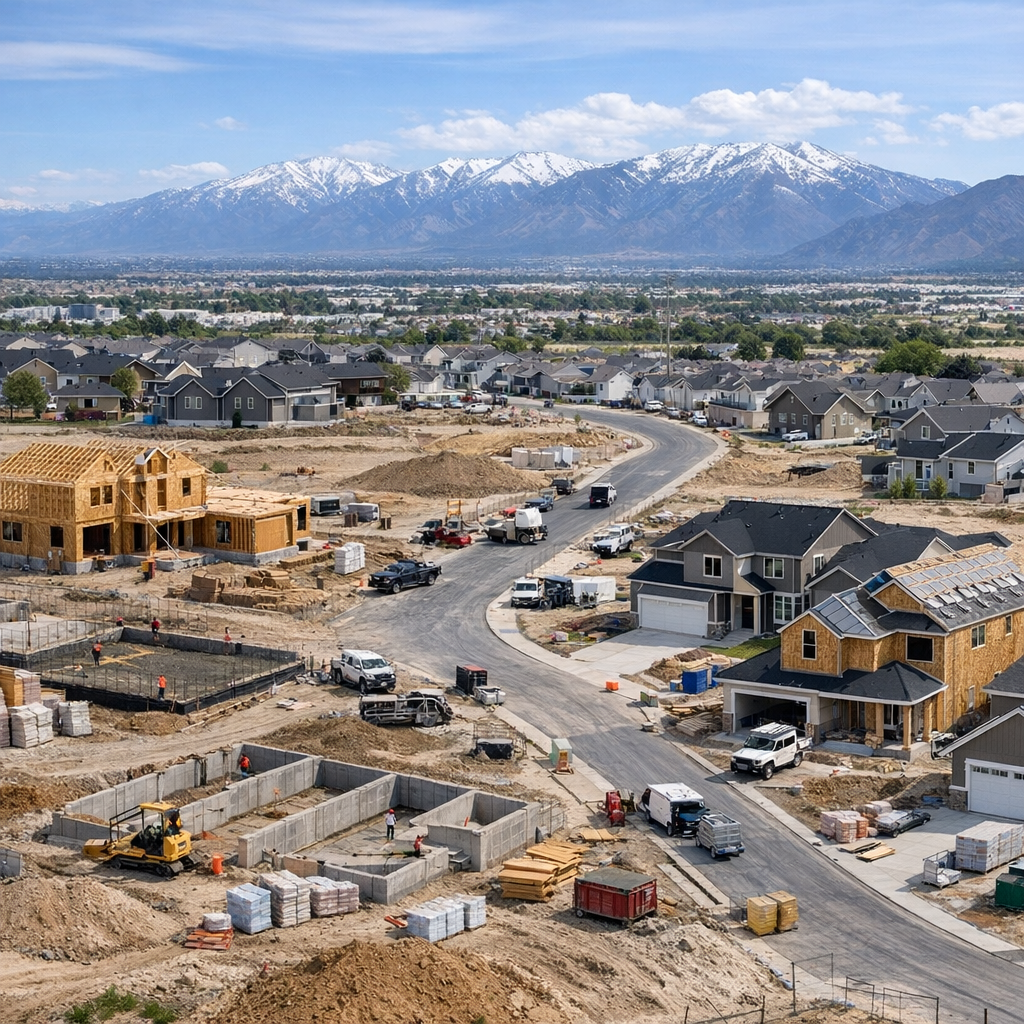
The city is growing into its undeveloped spaces. The Southwest Quadrant and areas near TRAX stations (City Center, Gardner, Jordan Valley) are primed for mixed housing and employment opportunities. Density is being encouraged—but with careful limits: many projects will be clustered around transit and commercially zoned corridors. Single-family homes remain dominant (~80% of housing stock), but multifamily units and accessory dwelling units (ADUs) are increasingly part of the conversation.
Highlighted Projects & Policy Moves
- Pierson Farms: A 52-lot single-family subdivision by McArthur Homes. Already more than halfway sold. Includes ADUs and designed in accordance with city master plans.
- Moderate Income Housing Plan: Adopted to ensure housing variety across price points and support households of different incomes, ages, and sizes.
- New Zoning Changes: The city has established overlay districts that incentivize higher-density housing in areas with existing infrastructure—especially near transit and retail nodes.
- Planning Commission Activity: Recent proposals include a 56-unit townhome development (“Enclave”) and a conditional-use permit for a new auto repair shop. These signal growing demand for both residential infill and supportive commercial uses.
What It Means for Locals: Homebuyers, Renters & Neighbors
If you’re a prospective homebuyer, it’s a competitive market where patience and readiness matter. While affordability challenges are real—especially for first-time buyers—lower inventory volatility presents opportunity for strategic buying.
Renters may find some relief if rents continue to ease, but options for small units remain limited, and households often spend more than economic benchmarks suggest they should on housing. Residents who participate in city processes—zoning meetings, development hearings—can help shape the near-term trajectory.
Advice for Navigating the Market
- Consider looking for homes or rentals in areas near transit or retail—these tend to hold value well and offer conveniences that offset cost burdens.
- If building or buying, explore ADU possibilities for added income or multigenerational living support.
- Stay informed about upcoming developments and zoning changes—many opportunities are emerging just on the horizon.
West Jordan is clearly in a moment of transition: growing population, rising household incomes, shifting housing mix, and careful planning to preserve what residents love while adapting to what they need.